
A community can take pride in having a symphony orchestra for years without ever imagining what it would mean to lose it.
Then the news arrives from somewhere else.
The Phoenix Symphony has announced that it will suspend performances after November 1, with musician layoffs beginning the following day and no confirmed date for returning. Nashville recently announced a season suspension before a $10 million gift from Oracle allowed performances to continue and prevented planned furloughs. In Dayton, programming reductions and a difficult contract negotiation have led to an unfair labor practice charge filed by the musicians, with allegations that remain to be resolved.
These are different situations, each with its own history. But together with recent high-profile labor disputes, including the Cleveland Orchestra’s strike and subsequent agreement, they reveal pressures that deserve our attention. Communities are confronting difficult questions about what they want their cultural institutions to provide and what they are prepared to do to sustain them.
Here on Cape Cod, I believe we need to have that conversation while we can still make thoughtful choices about our future.
What is the value of a symphony to this community? What would be missing if it were no longer here? And how do we ensure that the institution we cherish continues to matter to the people who live here?
For Cape Symphony, the answer begins with understanding the breadth of what we do.
Our orchestra brings extraordinary musicians together to create experiences that belong to the people in the room. A familiar work can reveal something unexpected. A new piece can challenge us. A film score, a popular song, or a great symphony can reach someone who has never attended before and give them a reason to return.
But the concert stage is only part of our work.
Our education program operates on a scale nearly equal to that of the orchestra itself. We have conservatory campuses in West Barnstable and Falmouth, an educational location in Brewster, and a thriving youth orchestra program. Our fully licensed preschool combines early childhood education with an arts-infused curriculum and Suzuki violin instruction. Children can begin their relationship with music here before they are old enough to read, then continue learning and performing with us as they grow.
Cape Symphony Presents extends that work into other settings, collaborating with artists, businesses, and community partners as we work to bring programming to all 15 Cape towns. These partnerships allow people to encounter live music close to home, in places where they already feel welcome.
This is what a symphony organization can mean to a region: a place to gather, a place to learn, and a source of creative opportunity across generations.
I am proud of that work. I am also conscious that fulfilling our mission does not, by itself, guarantee our financial future.
We face more competition for people’s time and attention than ever before. An evening out competes with an almost limitless supply of entertainment available at home. Social media delivers a constant succession of short experiences. Streaming offers convenience, choice, and control over when to begin, pause, or leave.
It is easy to understand the appeal. We all live busy lives.
A live performance asks something different of us. We must make a plan, leave the house, and give our attention to something unfolding at its own pace. That can feel like a considerable request in today’s world. It can also be exactly what we need.
There is value in spending time with something that cannot be hurried. There is value in hearing people listen and respond to one another. And there is value in sharing an experience with neighbors whose lives might otherwise never intersect with our own.
Our responsibility is to make that experience worth your time. We must offer compelling programs, communicate clearly, welcome newcomers, and listen when something about attending feels difficult or uninviting. We cannot assume that the way audiences engaged with us in the past will carry us indefinitely into the future.
The financial realities require the same honesty.
Professional orchestras generally cannot cover the full cost of their work through ticket sales alone. Rehearsals, performances, teaching, facilities, and the skilled people behind them all require support. Ticket prices that attempted to recover every dollar would put the experience beyond the reach of many of the people we exist to serve.
Public funding plays a larger role in many European cultural institutions. Here, individual donors, foundations, and businesses carry much of the responsibility alongside audiences and some public support. That generosity makes our work possible, and I am deeply grateful for it.
We also have a responsibility to use that support carefully. Musicians and teachers deserve fair compensation for work that takes years of training. Our organization must make commitments it can sustain. Those responsibilities require candid discussion, realistic planning, and a willingness to adapt before circumstances force decisions upon us.
At Cape Symphony, we are working to strengthen our audience, broaden our partnerships, assess the financial demands of our programs, and connect more people with what we offer. We want to protect the quality of our work by building a dependable foundation beneath it.
And that brings me to the most direct request I can make of our community:
Please come.
Donations remain essential and are always welcome. Attendance is essential, too. A full concert hall brings revenue, certainly, but it also brings energy, connection, and evidence that the work has a place in people’s lives.
We raise money so that people can experience music, learn, and participate. The purpose is fulfilled when you walk through the door.
If you are a subscriber, tell a friend why you keep coming. Invite someone who has never heard us. Help us understand what would make that first visit easier, and let us know how we can help. Consider a program that falls outside your usual interests. Encourage a young person to explore an instrument, or give yourself permission to begin learning something new.
Please fill out our surveys. Tell us what moved you, what disappointed you, and what might bring you back. That feedback helps us make better decisions.
You are also welcome to reach out to me directly. I make it a priority to be accessible and to respond to every message, whether it brings praise, a concern, or a difficult question. I want to understand what this organization means to you and where we can do better.
We are fortunate to have a symphony on Cape Cod. I feel equally fortunate to lead this organization in a community with so much curiosity, generosity, and creative spirit.
Its future will be shaped by the choices we make together: the concerts we attend, the students we encourage, the invitations we extend, and the support we provide.
I hope to see you at a performance soon.
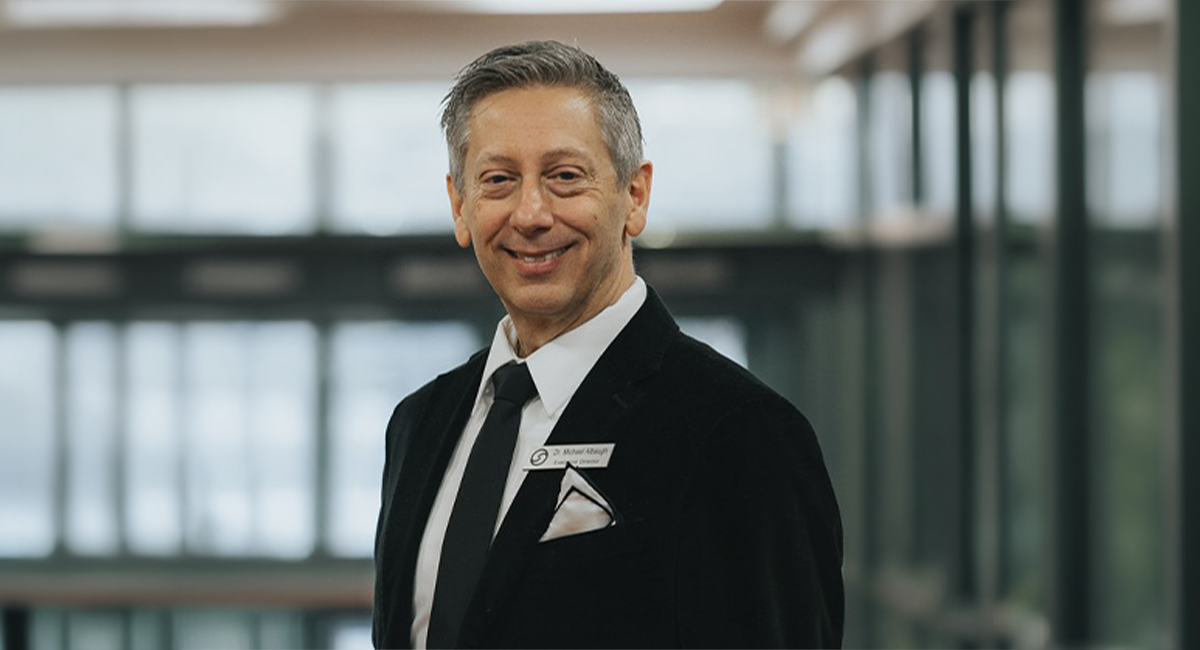
Dr. Michael Albaugh is President and CEO of Cape Arts & Entertainment.