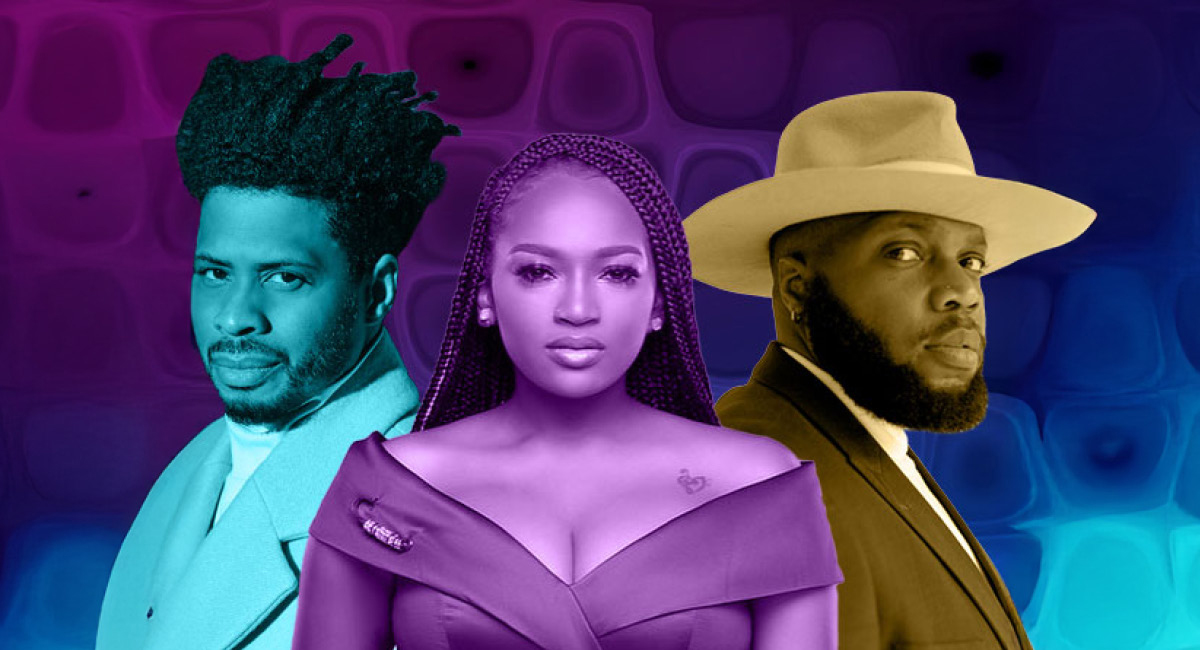

The Cape Symphony Orchestra presents Let's Groove Tonight: Motown and The Philly Sound at the Barnstable Performing Arts Center Saturday, June 13, 2026 at 3:00 PM and 7:30 PM and Sunday, June 14, 2026 at 3:00 PM.
Please enjoy a performance in the lobby at 2:00 PM on June 13 by the Cape Symphony Conservatory Seaside String Ensemble.
Download a printable version of these Program Notes.
THE CAPE SYMPHONY ORCHESTRA
Troy Quinn, Guest Conductor
Chester Gregory, Cherise Coaches, and Brik.Liam, Vocals
VIOLIN I
Jae Cosmos Lee, concertmaster
Rhiannon Banerdt, asst. concertmaster
Benjamin Carson
Lino Tanaka
Jiuri Yu
Norma Stiner
VIOLIN II
Heather Goodchild Wade, principal
Daniel Faris
EmmaLee Holmes-Hicks
Marc Benador
Deborah Bradley
Lawrence Chaplan
VIOLA
Danielle Farina, principal
Sachin Shukla, asst. principal
Lilit Muradyan
Susan Gable
Nissim Tseytlin
CELLO
Jacques Lee Wood, principal
Velleda Miragias, asst. principal
Michael Czitrom
Norma Kelley
FLUTE
Wendy Rolfe
Mariellen Sears
OBOE
Laura Pardee Schaefer
Elizabeth England
CLARINET
Mark Miller, principal
Janice Smith
TENOR SAXOPHONE
Nick Suchecki
BARITONE SAXOPHONE
Berke McKelvey
FRENCH HORN
Clark Matthews, principal
Neil Godwin
Marina Krickler
Virginia Morales
TRUMPET
Kyle Spraker, principal
Tobias Monte
Andrew Sorg
TROMBONE
Robert Hoveland, principal
Michael Tybursky
BASS TROMBONE
Gabriel Rice
TIMPANI
Michael Weinfield-Zell, principal
PERCUSSION
Paul Gross, principal
Michael Iadevaia
PIANO
Ben Cook
GUITAR
Jon Finn
This roster lists the musicians performing today’s concert, and is subject to change.
Cape Symphony’s official roster, including recognition of our musician chair supporters, is here.
LET'S GROOVE TONIGHT: MOTOWN & THE PHILLY SOUND
The Sound of Philadelphia
Kenneth Gamble, Leon Huff
Let’s Groove
Maurice White, Wayne Vaughan
I Heard It Through the Grapevine
Barrett Strong, Norman Whitfield
Could It Be I’m Falling In Love
Melvin and Mervin Steals
You’ll Never Find Another Love Like Mine
Kenneth Gamble, Leon Huff
Hurt So Bad
Bobby Hart, Teddy Randazzo
My Girl
Smokey Robinson, Ronald White
I’ll Be Around
Thom Bell, Phil Hurtt
Back Stabbers
Leon Huff, Gene McFadden, John Whitehead
Don’t Leave Me This Way
Kenneth Gamble, Leon Huff
INTERMISSION (20 minutes)
A Fifth of Beethoven
Ludwig van Beethoven, Arr. Walter Murphy
Ball of Confusion
Norman Whitfield, Barrett Strong
People Make the World Go Round
Linda Creed, Thom Bell
Me and Mrs. Jones
Kenneth Gamble, Leon Huff
I’m Coming Out
Bernard Edwards, Nile Rodgers
Rock the Boat
Waldo Holmes
Love Train
Kenneth Gamble, Leon Huff
Ain’t No Stoppin’ Us Now
Jerry Cohen, Gene McFadden, John Whitehead
ABOUT TODAY’S PROGRAM
Motown and The Philly Sound are two of the most influential soul music movements of the twentieth century. While both grew from African American musical traditions and produced countless hits, they developed distinct personalities. Motown, founded in Detroit by Berry Gordy in 1959, emphasized concise songwriting, driving rhythms, memorable hooks, and polished vocal performances designed to appeal to audiences across racial and cultural lines. Its recordings by artists such as Marvin Gaye, Diana Ross, and Stevie Wonder helped define the sound of the 1960s.
A decade later, Philadelphia producers and songwriters Kenneth Gamble and Leon Huff crafted a more sophisticated style. The Philly Sound paired lush strings, prominent horns, intricate arrangements, and smooth vocal harmonies with rhythms that paved the way for disco. These productions gave rise to artists such as Lou Rawls, Billy Paul, and The O'Jays.
Together, Motown and Philly Soul created a soundtrack for social change, celebration, romance, and the dance floor. Many of its greatest hits are featured in today’s concert. Let’s groove!
Recorded in 1974 by MFSB featuring The Three Degrees, The Sound of Philadelphia was originally written as theme music for Soul Train. It became the first television theme song ever to reach No. 1 on the Billboard Hot 100 and won a Grammy Award for Best R&B Instrumental Performance. Its soaring strings, driving rhythms, and exuberant groove became so closely associated with Philadelphia International Records that the title effectively named an entire musical style.
Earth, Wind & Fire’s smash hit Let’s Groove arrived in 1981, proving that despite the growing anti-disco sentiment of the time, dance music was far from finished. Built around synthesizers and funk rhythms, it became one of the group's biggest hits. The song's (then) futuristic music video was the first ever to be played on BET’s Video Soul, and helped usher in the MTV era.
I Heard It Through the Grapevine almost never happened! Smokey Robinson and Marvin Gaye both recorded the song, but Berry Gordy declined to release either version. After a competing recording by Gladys Knight & the Pips became a hit, radio DJs began playing Gaye's 1968 album track so frequently that Motown finally issued it as a single. The result was a seven-week No. 1 hit and Motown's biggest-selling single up to that time.
The Spinners' first great Philly Soul classic, Could It Be I’m Falling In Love paired producer Thom Bell's elegant arrangements with the songwriting talents of brothers Melvin and Mervin Steals, who sometimes wrote under the names "Mystro" and "Lyric." The 1972 recording helped establish the Spinners as one of the defining vocal groups of the decade.
Written specifically for Lou Rawls in 1976 after he joined Philadelphia International Records, You’ll Never Find Another Love Like Mine became his signature song and biggest hit. The velvety ballad topped the R&B charts, reached No. 2 on the Billboard Hot 100, and introduced a new generation to Rawls's rich baritone.
More widely remembered from Linda Ronstadt’s later recording, the dramatic pop-soul ballad Hurt So Bad first became a hit for Little Anthony & the Imperials in 1965. Songwriter Bobby Hart would later achieve even greater fame as half of the songwriting team behind many hits for The Monkees.
Few songs capture Motown’s warmth and optimism more perfectly than My Girl. Written by Miracles members Smokey Robinson and Ronald White for their own band, the song was recorded by the Temptations after Robinson decided David Ruffin’s voice was better suited to it. It became their first No. 1 hit.
Originally intended as a B-side, 1972’s I’ll Be Around became so popular with radio stations that Atlantic Records flipped the single. The result was the Spinners' first million-selling hit and one of producer Thom Bell's finest achievements, combining heartbreak and elegance in equal measure.
With Back Stabbers, the O'Jays transformed a tale of betrayal into one of The Philly Sound’s defining recordings, reflecting the growing sophistication of early ’70s soul. The song helped establish Philadelphia International Records as a major force in popular music.
Featuring Teddy Pendergrass’s soaring lead vocals, Don’t Leave Me This Way became a major R&B hit before later finding international fame through Thelma Houston’s disco version. Its emotional intensity and danceable groove perfectly capture the bridge between Philly Soul and disco.
INTERMISSION (20 minutes)
Walter Murphy transformed the opening of Beethoven's Fifth Symphony into a dance floor sensation with A Fifth of Beethoven. The 1976 recording reached No. 1 on the Billboard Hot 100 and gained additional fame as part of the Saturday Night Fever soundtrack, illustrating disco's ability to absorb influences from virtually anywhere.
Recorded by The Temptations, Ball of Confusion captured the turbulence of America in 1970. Referencing war, politics, social unrest, and generational conflict, it remains one of Motown's boldest social commentaries.
People Make the World Go Round offered a thoughtful look at urban life and human behavior in 1972. Songwriter Linda Creed would later co-write "The Greatest Love of All," while Thom Bell became one of the architects of the Philadelphia Sound.
Billy Paul's tale of illicit romance, Me and Mrs. Jones became one of the 1970s’ most enduring ballads. According to Gamble and Huff, the song was inspired by conversations about real-life affairs among friends and acquaintances. Its smooth sophistication made it a defining Philly Sound recording.
Written in 1980 by Chic founders Bernard Edwards and Nile Rodgers, I’m Coming Out was inspired by Diana Ross impersonators at a New York drag club. Its exuberant message of self-expression made it an LGBTQ+ anthem. It’s also one of very few pop hits to feature a trombone solo!
Waldo Holmes’s Rock the Boat, recorded by The Hues Corporation in 1973, is one of the earliest disco songs to top the Billboard charts. Its buoyant rhythm, infectious chorus, and carefree optimism helped pave the way for the disco explosion that followed.
The O'Jays' international anthem Love Train calls on listeners around the world to join together in peace and harmony. Reaching No. 1 in 1973, it became one of the Philly Sound's most enduring statements of optimism and unity. Its message is relevant all these decades later: Ride this train, y’all.
McFadden & Whitehead wrote Ain’t No Stoppin’ Us Now out of frustration with their record label, turning personal determination into a universal declaration of perseverance. It became a crossover smash and is still heard at celebrations, sporting events, and whenever a spirit of triumph is called for: “Don’t you let nothing, nothing, stand in your way.”
Thank you for attending today’s concert.
We hope you had a wonderful time and that we’ll see you again soon.
BEHIND THE SCENES
PRODUCTION TEAM
Director of Concert Operations
Patrick Gallagher
Stage Manager
Kimberly Monteiro
Assistant Stage Manager
Brendan Gallagher
Lighting Designer
Kendra Murphy
Stage Crew
Jay Ivanof
John Bishop
ASSISTANT CONDUCTOR
Joe Marchio
BOX OFFICE
Rebeka Broitman, Supervisor
Eleanor Fothergill
HOSPITALITY COORDINATOR
Charlotte Baxter
LIBRARIAN
Victoria Krukowski
MANAGING ARTISTIC PRINCIPAL
Jae Cosmos Lee
PERSONNEL MANAGER
Wesley Hopper
USHER SUPERVISOR
Betty Morse
Cape Arts & Entertainment Staff and Board of Trustees
The Cape Symphony Orchestra’s CapePOPS! series is sponsored by Cape Cod 5.
SUPPORT YOUR CAPE SYMPHONY ORCHESTRA
Concert ticket sales cover only part of the cost to maintain a professional orchestra on Cape Cod. Generous donations and community support make the difference.
Donating is easy, online at www.capesymphony.org/donations or by mail to Cape Symphony, 2235 Iyannough Road, West Barnstable, MA 02668. Thank you!
Program Notes by